
Why Digital Menus Became a Compliance Challenge
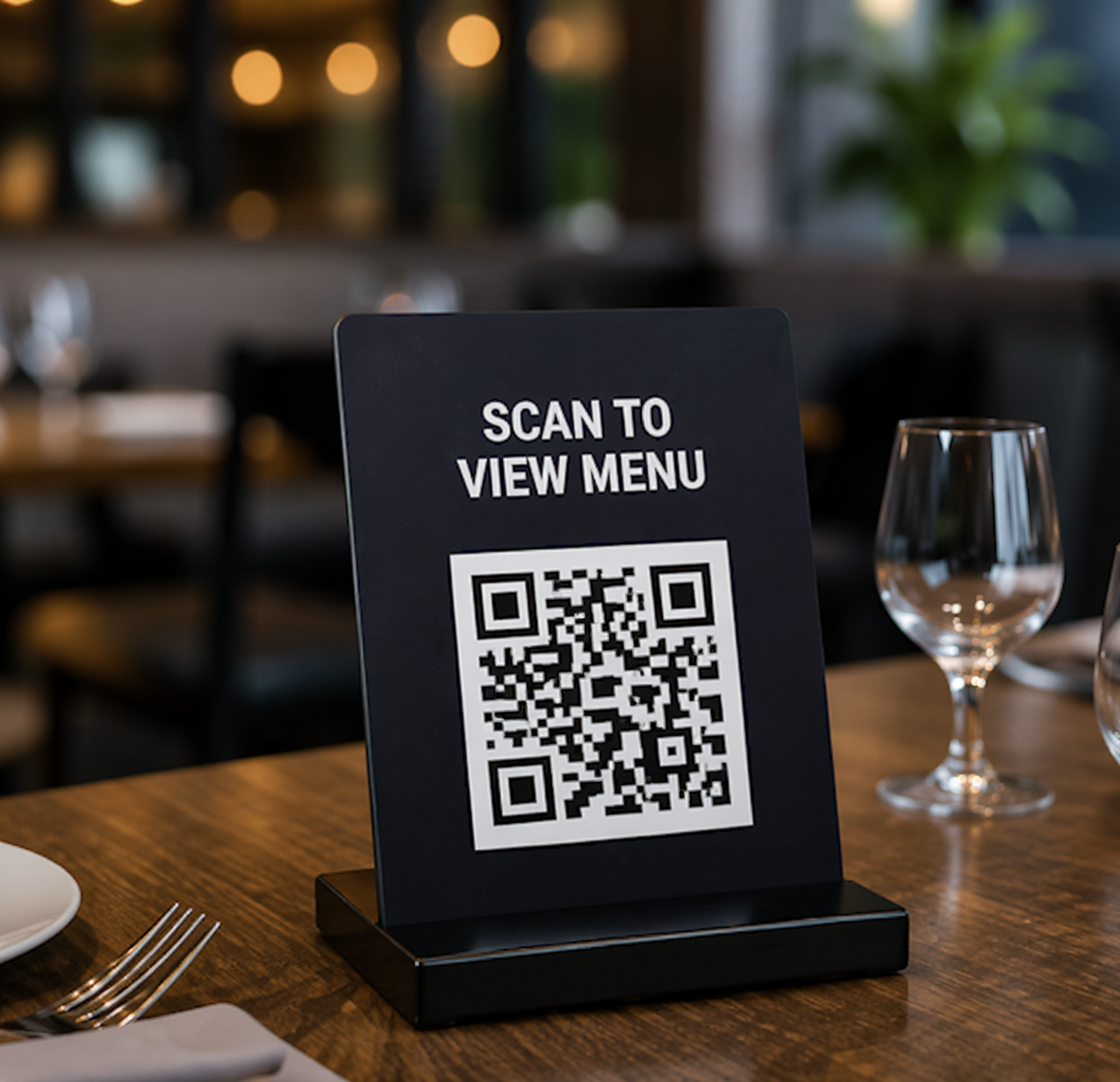
TheScanBadge did not start as a compliance platform. It started with a simple request from restaurants: make menus easier. Replace paper, update prices faster, and simplify the guest experience with QR and NFC.
What began as a usability improvement quickly revealed a deeper issue. Not because restaurants were doing something wrong, but because the tools they used were never designed with long-term traceability in mind.
How It Started
Restaurants wanted flexibility, speed, and control. But once digital menus were introduced, new questions followed:
- What did our menu look like last month?
- Can we prove previous prices?
- What happens during an audit?
That is when it became clear: a menu is not just presentation. It is part of the business record.
Where It Gets Risky
Most restaurants are not aware of the risk. Not because they ignore compliance, but because their workflows overwrite data by default.
Prices change. Menus get updated. Old versions disappear. And only when an audit happens, the question arises: can you prove what was actually offered at a given moment in time?
The Legal Reality in Europe
Across Europe, businesses are required to retain and be able to reproduce financial-related data. While menus are not always explicitly mentioned, they directly influence pricing, VAT, and reported revenue.
| Country | Key Regulations | What It Means | Retention Period |
|---|---|---|---|
| Germany | AO §§140, 146, 147, GoBD, UStG | Records must be traceable, complete and audit-proof | 10 years |
| Netherlands | AWR Article 52, VAT Act | Business data must be retained and verifiable | 7 years (10 for real estate) |
| Belgium | VAT Code, Economic Law | Pricing and turnover must be demonstrable | 7 years |
| France | Commercial Code, Tax Code | Records must support financial reporting | 6–10 years |
| Spain | General Tax Law, VAT Law | Historical pricing may be reviewed during audits | 4–6 years |
| Italy | Civil Code, DPR 633/1972 | VAT and transaction data must be supported | 10 years |
The key takeaway: authorities do not ask how you manage your menus. They ask whether you can prove your numbers.
What You Can Do Today
You do not need a specific platform to solve this. But you do need structure. A few practical steps already make a big difference:
- Store every menu version instead of overwriting it
- Add timestamps to every change (date and time)
- Create periodic exports (PDF or CSV) as fixed snapshots
- Align menu pricing with your POS system
- Ensure historical data is easily retrievable during audits
Even simple processes like version-controlled folders or structured naming conventions can significantly reduce risk.
Where We Fit In
While working with customers, we encountered these challenges repeatedly. Not as edge cases, but as a structural gap between tools and expectations.
That is why we approached menus differently. Not as temporary content, but as structured data with versioning and traceability built in.
Could this be solved without TheScanBadge? Yes.
But in practice, many businesses prefer not having to build and maintain this structure themselves. That is where we help. Not by replacing responsibility, but by making it easier to get it right.
Final Thought
Menus used to be temporary. Today, they influence financial reporting.
Whether you solve it manually or with tooling, one thing is clear: being able to prove your pricing is no longer optional.
And the earlier you structure it properly, the less it becomes a problem later.